
Registration is open
The Activated Egg Symposium 2026
Unique Human Egg Activation Pathways
November 6, 2026
MIT Endicott House, Dedham, MA + live online
Our goal is to accelerate solutions for understudied health problems affecting millions of people.

Stem cells from Parthenotes
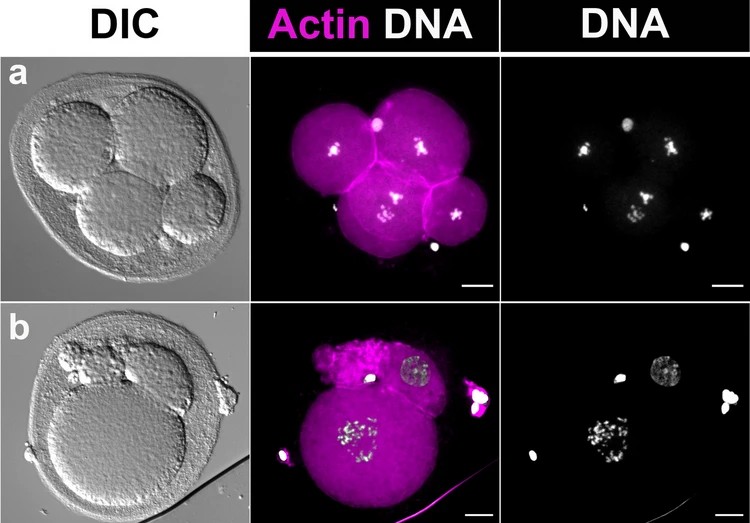
Unfertilized human eggs activated in the laboratory, termed “parthenotes,” can divide into stem cells with the capacity to develop into any body tissue type.

Stem Cell Growth and Culture
We have developed the first circadian incubator for stem cells as well as specialized culture medium with over 40 years of research findings behind it.

HIV / AIDS
Cure & Prevention
Over 30 years of research dedicated to the prevention and cure of HIV/AIDS.

Diseases of the Prostate
Developing semen analysis tests to evaluate male health.
Join Our Community!
Stay up to date on the latest news and events.
Celebrating 30 Years of SPAR
Since 1996, BRF has conducted stem cell and reproductive health research without a single dollar of federal funding.
This video tells the story behind how BRF began — with an urgent question during the height of the AIDS crisis—could couples affected by HIV safely have children?—and how that work grew into a pioneering institute advancing stem cell science, reproductive health, and research on infectious diseases.
Latest News
-
Why do ‘normal’ embryos still fail?
Even chromosomally normal embryos often fail, and at the 2023 Activated Egg Symposium, David Keefe offered a surprising explanation. Ahead…
-
A Faster Way to Study Stem Cells—With a Surprising Observation About Fertility
An improved method for deriving stem cells shortens the time to just a few weeks(rather than months)—changing how scientists can…
-
Breakthrough Study Demonstrates Viability of Ambient Temperature Transport for Human Oocytes, Unlocking New Research Opportunities
The study, titled “Ambient Temperature Transport of Human Oocytes: An Unexpected Research Resource,” explored the potential of immature oocytes from…

The Foundation is a forward thinking institution that covers overhead costs by fee-for-service testing, thus allowing philanthropic donations to go directly to research.
– Alan Geismer, Chairman, Board of Trustees
Why give to Bedford Research?
Each Experiment Brings Us Closer
The average foundation laboratory experiment costs $90,000. Because most of our overhead is covered by fee-for-service laboratory tests, 94% of every dollar you donate goes directly toward these experiments. This innovative funding model allows Bedford Research scientists greater flexibility to move the work quickly in promising new directions. Please become a supporter and help us do more experiments this year.

Independent, But Not Alone
As an independent, non-federally funded research institute, our scientists have more flexibility and more consistency than most facilities dependent on federal grants. This unique status in the research community has attracted partnerships across the world, including projects at:


An innovative funding model that’s been working for almost 30 years.
We follow a model of socially relevant entrepreneurship using fee for service products to help cover our overhead. Before NIH grants became the target for so many institutions, this model was more common, for example, the Salk Institute in San Diego, CA, that used non-federal resources to develop the polio vaccine.